
Respiratory syncytial virus (RSV)
Respiratory syncytial virus (RSV) is a respiratory virus that affects people of any age and which spreads mostly during autumn and winter in the European Union (EU).
HumanData on medicinesMedicines
The respiratory syncytial virus (RSV) mostly leads to mild disease though it can sometimes cause severe health complications that can be life-threatening.
Infants and older adults are at higher risk of RSV-related complications. These can lead to many hospitalisations in children under 5 years old, as shown in the data visualisation below. They can also lead to increased mortality in older adults, according to an EMA-funded study within our Data Analysis and Real World Interrogation Network (DARWIN EU) project.
The Darwin EU study findings illustrate the significant disease burden of RSV, which affects many people and puts pressure on healthcare systems.
Vaccination protects against RSV complications.
The European Medicines Agency (EMA) evaluates, recommends and monitors vaccines against diseases such as RSV in the EU.
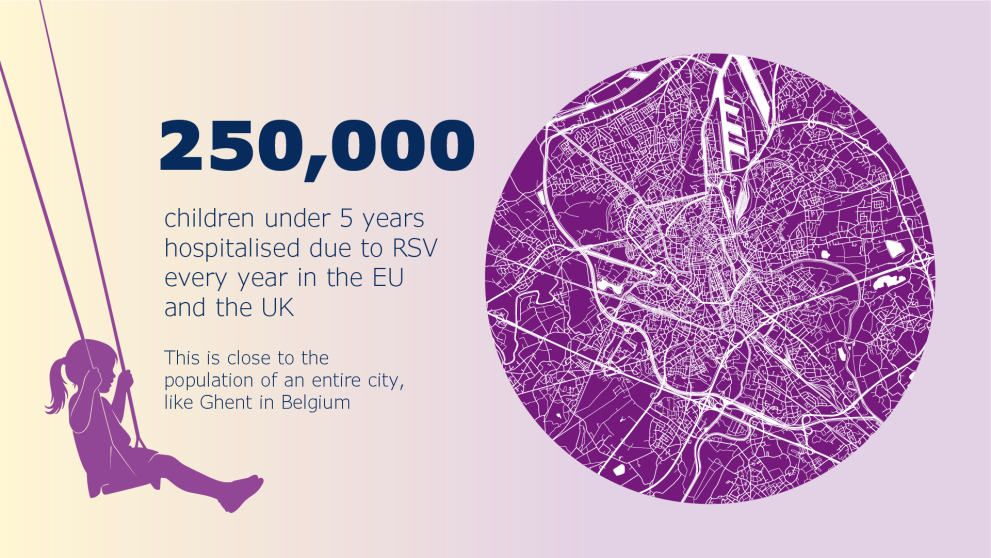
250,000 children under 5 years hospitalised due to RSV every year in the EU.
This is close to the population of an entire city, like Ghent in Belgium.
For more information on RSV and other vaccine-preventable diseases, see:
In children under 5 years, RSV caused an estimated 3.6 million hospital admissions worldwide in 2019
RSV infects almost all children under 2 years of age
1 in every 20 older adults in Europe is infected with RSV every year
The respiratory syncytial virus (RSV) lives in the nose and throat of people who become infected.
When they breathe, speak, cough or sneeze, they release virus-containing droplets in the air.
Infection can occur when:
People infected by RSV usually recover within about a week without the need for medical treatment.
Complications from RSV can include:
Those most at risk for complications are:
RSV infection is very common in early childhood.
Although RSV is usually mild, it can cause serious illness, especially in those under 6 months of age. The risk is also higher in those:
Infants (aged 0 to 12 months) infected with RSV risk developing:
RSV is responsible for more than 80% of lung infections in infants younger than 1 year during the peak of the viral season.
The data visualisation featured below provides statistics on hospitalisation per age group.
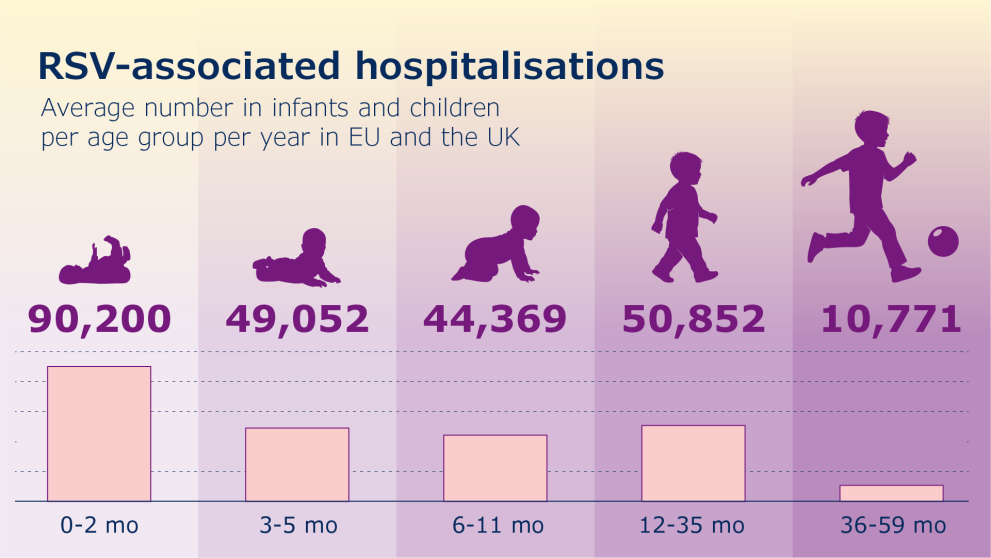
RSV-associated hospitalisation in infants and children - average number per age group per year in the EU and the UK:
Almost all children get infected with RSV before the age of 2.
In children under 5 years, RSV caused an estimated 3.6 million hospital admissions and over 100,000 deaths worldwide in 2019, as shown in the data visualisation featured below. This was before the authorisation of RSV vaccines.
RSV accounts for more than 60% of respiratory infections in children globally, according to the World Health Organization.
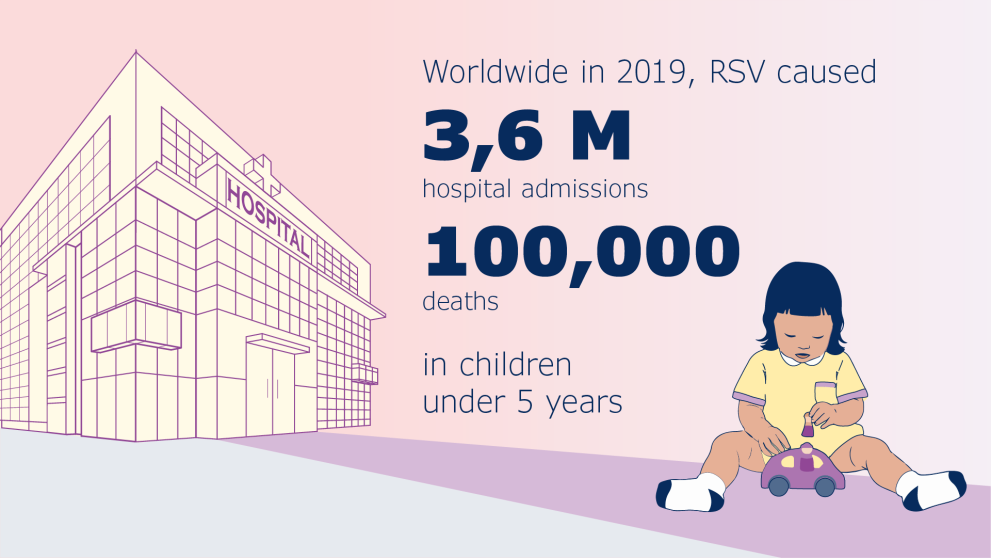
Worldwide in 2019, RSV caused in children under 5 years:
For more information, see:
Older adults (aged 65 and older) are at risk of developing severe health complications from RSV infection. Compared to other age groups, they are also more likely to die from RSV infection. This is according to an EMA-funded study within our Darwin EU project.
Older adults are more vulnerable because their immune system has become weaker with age. They can also have other health conditions that can increase their risk of developing complications.
In Europe, around 1 in 20 older adults get infected with RSV every year.
RSV is also responsible for the hospitalisation of roughly 160,000 adults each year in Europe. More than 90% of these hospitalisations occur in adults of 65 years and older, as shown in the data visualisation featured below.
In the Netherlands, RSV leads to the death of up to 2 per 10,000 people aged 75 and older.

Infections:
Hospitalisations:
For more information, see:
RSV vaccination protects against complications caused by RSV infection.
In the EU, RSV vaccines are only approved in adults.
Maternal vaccination is an effective way to protect infants. There are other types of preventive RSV medicines that can be given to children. These medicines contain antibodies given by injection but are not vaccines as such.
Questions and answers are available below on RSV medicines authorised in the EU:
Vaccination protects people against lung complications from RSV infection.
In April 2026, three centrally authorised vaccines offering a strong protection against RSV disease were available in the EU. They are highlighted in the table below:
| Vaccine | Protection against RSV | Population |
|---|---|---|
| Abrysvo | Protects against lung complications such as bronchitis or pneumonia |
|
| mResvia | Protects against lung complications such as bronchitis or pneumonia |
|
| Arexvy | Protects against lung complications such as bronchitis or pneumonia |
|
As of April 2026, there is no vaccine authorised for use in children in the EU.
Vaccinating pregnant women will protect their infants against RSV-related lung complications, from birth and up to 6 months of age.
Vaccination is not the only way to prevent these complications.
Preventive medicines are available to protect young children.
These medicines are available to protect infants and young children against lung complications.
These medicines are given by injection. They contain antibodies that can neutralise RSV and prevent infection.
Three preventive medicines are authorised in the EU to protect infants and children against lung complications. They are highlighted in the table below:
| Treatment | Prevention | Population |
|---|---|---|
| Beyfortus | Protect against RSV-related lung complications |
|
| Synagis | Protects against RSV-related lung complications |
|
Hospitalisation due to lung complications from RSV infection has reduced by more than 80% in infants younger than 3 months whose mothers were vaccinated during pregnancy, compared with infants of unvaccinated mothers. This is based on a study carried out in the UK, between August 2024 and March 2025.
Vaccination lowered the risk of hospitalisation for lung complications in infants in their first 6 months of life by more than 70%. This is according to a real-world study from Argentina carried out during the 2024 RSV vaccination season. Argentina is the first country to roll out RSV vaccination during pregnancy.
Vaccination with Abrysvo during the 2024-2025 RSV vaccination season reduced hospitalisation for lung complications by more than 90%. This is according to a study carried out in Denmark involving more than 100,000 people aged 60 years and older.
For more information, see:
An update log is available to show the date and summary of changes to this webpage. It does not include updates to linked documents or minor edits like typos or broken link fixes.
20 April 2026
Page first published