EMA consults on virtual control groups to help reduce animal use in medicines development
A draft qualification opinion for the new testing method is open for consultation
NewsHumanInnovationResearch and development
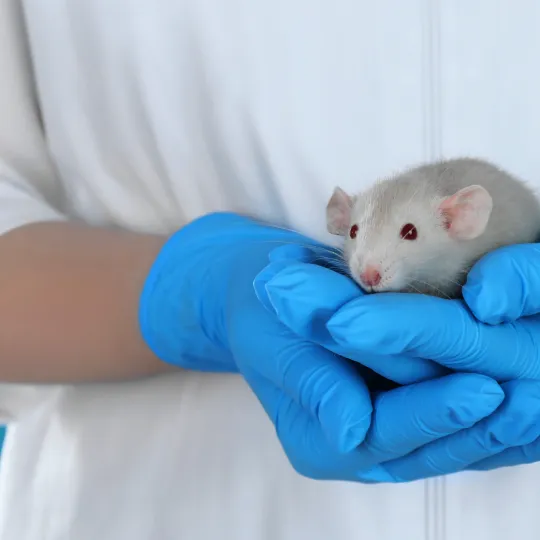
EMA’s human medicines committee (CHMP) has issued a draft qualification opinion for a new methodology in preclinical research, which can reduce the overall number of animals (rats) used in specific dose-range finding studies. This method replaces standard (concurrent) animal control groups with virtual control groups. By qualifying this new approach methodology (NAM), the CHMP can accept evidence generated using virtual control groups (within the defined context of use) as scientifically valid in future medicines applications.
While the reduction of animal testing will be gradual, this first qualification opinion for a NAM used in the assessment of toxicity, creates a blueprint for future applications. Potential iterations of the NAM could be qualified for use in toxicological studies where control groups are routinely required. Replacing control groups with ‘virtual animals’ in such studies would have a substantial impact on reducing the total numbers of animals used.
Virtual control groups are established by characterising control data and identifying appropriate ‘virtual comparator animals’ for treated animals. This is done in line with a standard operating procedure, using a statistical approach that is complemented by expert judgement.
The qualification of virtual control groups marks a crucial first step towards reducing animal use in medicines testing. Public consultation on the draft qualification opinion is open from 31 March to 12 May 2026, allowing input from the scientific community and stakeholders. Comments should be sent to ScientificAdvice@ema.europa.eu using this template.
Innovative NAMs, like virtual control groups, support EMA’s commitment to the 3Rs principles – to replace, reduce and refine the use of animals in medicines development and regulation. They also align with work being done by the International Coalition of Medicines Regulatory Authorities (ICMRA), to encourage the development, validation and adoption of testing methods and strategies that reduce and replace the use of animals for regulatory purposes where possible. In this way, NAMs can contribute to broader international 3Rs efforts to integrate alternative approaches within regulatory frameworks for medicines.
Through the integration of virtual control groups, EMA also seeks to improve the relevance and predictability of non-clinical testing, which supports both more efficient and more ethically responsible medicines development. A key requirement for the implementation of virtual control groups is the assurance that their use does not compromise study outcomes or pose a threat to human safety in later clinical trials.
EMA supports the progressive integration of NAMs through various mechanisms, including qualification, with the aim of enabling their regulatory acceptance, fostering innovation and reducing reliance on animal testing while ensuring human and animal safety. An overview of EMA’s 3Rs achievements and ambitions can be found in a recently published article linked below.