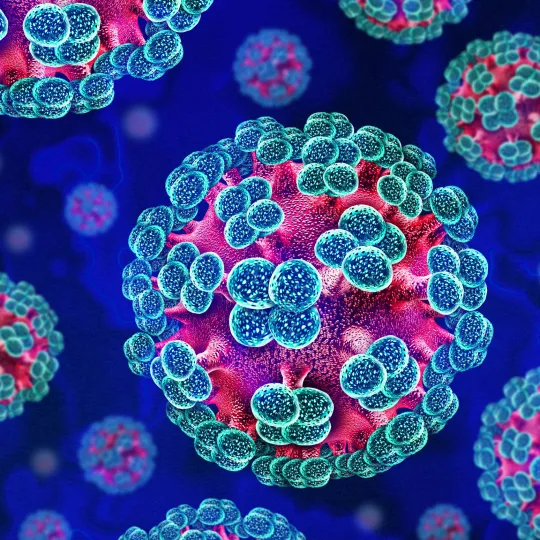
Hantavirus
The European Medicines Agency (EMA) is monitoring the May 2026 hantavirus outbreak linked to a cruise ship. This in line with EMA's crisis preparedness and management responsibilities.
Human
Hantaviruses are a group of viruses that people usually become infected with through exposure to particles such as urine, droppings, or saliva from infected rodents.
In humans, hantavirus infection can cause severe illness. Symptoms vary depending on the specific type of hantavirus involved.
The virus linked to the May 2026 outbreak on a cruise ship has been identified as Andes hantavirus. This is the only hantavirus known to spread from person to person, although this typically requires close and prolonged contact.
Treatment focuses on relieving symptoms and providing supportive care.
The risk to people in the EU / EEA is very low, according to the European Centre for Disease Prevention and Control (ECDC).
EMA continues to monitor the situation, in line with its crisis preparedness and management responsibilities.
For more information on how EMA helps manage public health threats, see:
There are currently no authorised vaccines or antiviral treatments for hantavirus.
EMA, through its Emergency Task Force (ETF), stands ready to support the development and regulatory evaluation of vaccines and therapeutics for hantaviruses.
As part of its preparedness activities, EMA has mapped developers of medicines, especially antivirals, monoclonal antibodies and vaccines against hantaviruses. The identification of repurposed immunomodulators for treatment and of repurposed antivirals for post-exposure prophylaxis are a priority to reduce morbidity and mortality for currently affected individuals.
EMA cautions against misinformation circulating online that falsely links hantavirus infections to COVID-19 vaccination.
There is no scientific evidence supporting such claims.
An update log is available to show the date and summary of changes to this webpage. It does not include updates to linked documents or minor edits like typos or broken link fixes.
22 May 2026
Page first published